4 min read · 26 October 2026
How to build a contents list for insurance
Learn how to create a home contents inventory to support your insurance claims. Keep track of your belongings and their value without the stress.
Written with AI and reviewed against sources. General information only, not legal advice.What that means
- insurance
- home
- contents
- inventory
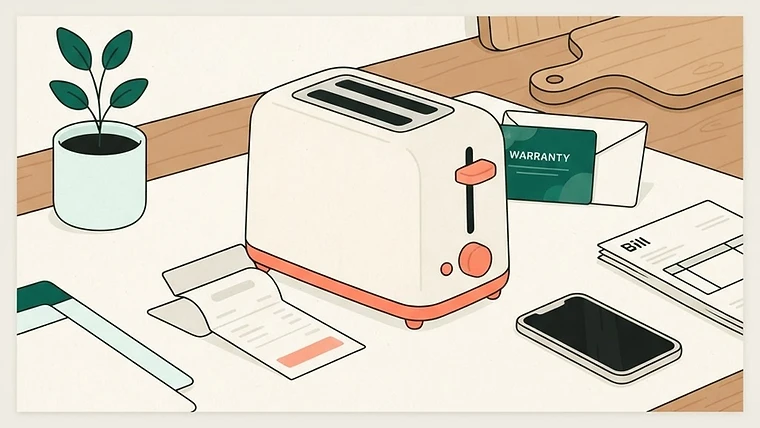
Building a home contents inventory for insurance helps you if you ever need to make a claim for lost, stolen, or damaged items. When you file a claim, your insurer may ask for proof of ownership to verify what you owned and its value. Having a clear, up-to-date list makes this process much faster and less stressful during a difficult time. You do not need to be a lawyer to manage this, and you can keep it simple by working through your home one room at a time.
Why you need a list
Insurers often require evidence to settle a claim. This is known as proof of ownership. While a receipt is a common form of proof, other documents like bank statements, credit card records, or instruction manuals can also help. If you have high-value items like jewellery or electronics, your insurer might have specific requirements for how these are documented. Checking your policy wording helps you understand exactly what your provider expects.
If you are worried about losing paper receipts, you can use Hey Proofy to photograph or upload your receipts as you buy items. This keeps your proof of purchase in one place, making it easier to search for specific items when you need them. You can also share this information with your household so everyone knows where the records are kept.
How to document your belongings
Start by walking through each room of your home. For major items, record the make, model, and serial number. Note the approximate purchase date and the price you paid. Taking clear photos of your belongings is a practical way to show what you own. If you have the original packaging or manuals, keep those too, as they can serve as additional evidence.
It is helpful to keep your list current. You do not need to do this every week, but updating your records after a significant purchase is a good habit. Hey Proofy can help you track warranty dates and keep your bills and subscriptions in one list, which keeps your household admin tidy without becoming a chore.
What counts as proof
Your insurer may accept several types of documentation. Receipts are common, but they are not the only option. If you have lost a receipt, look for bank or credit card statements that show the transaction. Photos or videos of your home that happen to show the item in the background can also be useful. In some cases, a valuation from a professional is necessary for expensive items. Your insurer will tell you when it requires proof of ownership for your claim and the type of proof that it requires.
Remember that your consumer rights under the Consumer Guarantees Act 1993 apply to the quality and fitness of goods you buy. While this is separate from your insurance policy, keeping good records helps you manage both your consumer rights and your insurance coverage effectively. You can find more information on your rights at https://heyproofy.com/nz/your-rights.
What to do next
- Walk through your home and take photos of your major appliances, electronics, and furniture to create a basic visual record.
- Gather your recent receipts and store them in a secure, digital place, such as https://heyproofy.com/nz, so you can find them quickly if you ever need to make a claim.
Quick answers
- What is proof of ownership for insurance?
- Proof of ownership is documentation that shows you own the items you are claiming. This can include purchase receipts, bank or credit card statements, instruction manuals, or photos of the items. Your insurer uses this to verify your claim and determine the value of the lost or damaged property.
- Do I need a receipt for every item?
- Not necessarily. While receipts are the best proof, insurers often accept other evidence like bank statements, photos, or manuals. If you have lost a receipt, check with your insurer about what other forms of evidence they accept. Keeping digital copies of receipts as you buy items makes this much easier.
- How often should I update my inventory?
- There is no set rule, but it is wise to update your list whenever you buy a high-value item. A simple way to manage this is to add new receipts to your records immediately. Using an app like Hey Proofy can help you keep these records organised and searchable for your whole household.
Sources
The official pages this guide was reviewed against. They are the authority, not us.