4 min read · 7 October 2026
What counts as proof of purchase in New Zealand
Learn what documents you can use to prove you bought an item. Find out how to manage your receipts and records to support your rights under the Consumer Guarantees Act.
Written with AI and reviewed against sources. General information only, not legal advice.What that means
- receipts
- consumer rights
- household admin
- proof of purchase
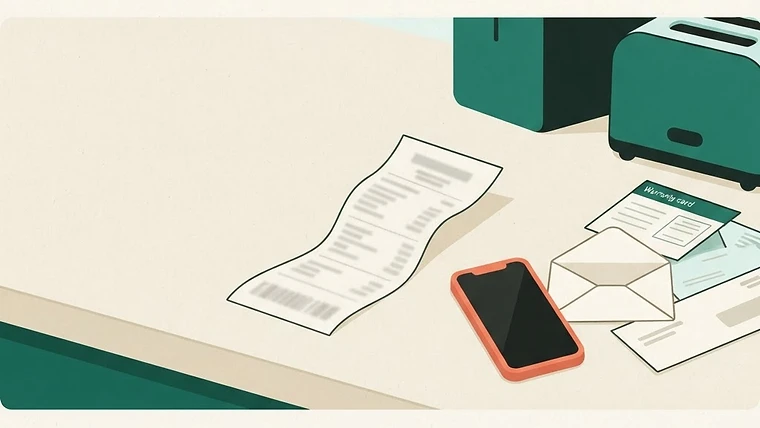
Knowing what counts as proof of purchase is essential when you need to return a faulty item or make a claim. Under the Consumer Guarantees Act 1993, goods sold to you must be of acceptable quality, fit for purpose, and last a reasonable time given their price and type. If you need to request a repair, replacement, or refund, the retailer may ask you to demonstrate that you bought the item from them. You do not need to be a legal expert to understand that you simply need to reasonably show the transaction took place.
Understanding your evidence
A standard till receipt is the most common form of evidence, but it is not the only option. Other documents can help you prove a purchase, such as a credit or debit card statement, a lay-by agreement, or an order confirmation number from an online transaction. If you have lost your original paper receipt, you can often ask the retailer for a copy. Hey Proofy can help you keep these records organised by allowing you to photograph or upload receipts, which keeps your bills and subscriptions in one list for easy access. It is important to distinguish between a receipt and a warranty card. A warranty card often contains details about the manufacturer or supplier, the date of purchase, and the amount paid, which can sometimes serve as evidence of the transaction. However, a warranty is a separate promise from the manufacturer. Your rights under the Consumer Guarantees Act exist regardless of whether you have a formal warranty card, provided you can show you purchased the item.
When documents are not enough
Sometimes a single document might not be sufficient on its own. For example, a bank statement confirms a charge occurred but does not always itemise exactly what you bought. In these cases, you might need to pair it with another record, such as an email confirmation or a photo of the product packaging. The law does not set a strict definition of how much proof is enough, so providing a combination of documents can help you build a clearer case if a dispute arises. If you are struggling to keep track of your paperwork, Hey Proofy can assist by reading the shop, date, total, and items from your receipts. It also tracks warranty dates with a reminder before they end, ensuring you are prepared if you need to act. You can share this information with your household, making it easier for everyone to stay on top of your shared admin.
What to do next
-
Review your current filing system and start using https://heyproofy.com/nz to store digital copies of your receipts so they do not fade or get lost.
-
Read more about your rights under the law at https://heyproofy.com/nz/your-rights to understand how the Consumer Guarantees Act protects your household purchases.
Quick answers
- What is the best proof of purchase?
- An itemised receipt is the strongest form of proof because it clearly shows what you bought, when you bought it, and how much you paid. It stands alone as evidence of the transaction. If you do not have one, you can use other documents like bank statements or order confirmations to help demonstrate the purchase.
- Can I use a bank statement as proof?
- A bank or credit card statement can help corroborate a transaction, but it rarely stands alone because it usually does not list the specific items purchased. It is best to pair a bank statement with another record, such as an email confirmation or an invoice, to provide clearer evidence of what you bought.
- Do I need a receipt for a refund?
- Retailers are entitled to ask for proof of purchase when you request a repair, replacement, or refund. While a receipt is the most common form, the law does not require it to be the only form. You can use other evidence, such as a credit card statement or a transaction reference number, to reasonably demonstrate the purchase.
- Is a warranty card the same as a receipt?
- No, they are different. A warranty card is a document from a manufacturer that may outline specific coverage, while a receipt is evidence of the sale. You can use a warranty card as proof of purchase if it includes the supplier details, date, and amount, but your rights under the Consumer Guarantees Act apply even without one.
Sources
The official pages this guide was reviewed against. They are the authority, not us.